Friday, March 31, 2017

This Mesozoic Month: March 2017

Well. That was a month, eh? Before we dive into this wild lunar cycle of paleontological action, I'll put out one more call: if you are a paleoartist and you haven't taken the 2017 Survey of Paleoartists, do it! It's easy and won't take too long.

In the News

Ornithoscelida. This is the name given new clade consisting of ornithischia and theropoda, according to a new phylogenetic study by Matthew Baron with Paul Barrett and David Norman. This new model proposes that the sauropodomorphs and theropods aren't quite as closely related as we've thought, with saurischia redefined to be sauropodomorpha + hererrasauridae. Many interesting implications here. Let's see how is pans out over time. Read more from Darren Naish at TetZoo, Ed Yong at the Atlantic, and Pete Bucholz at Earth Archives.

Anchiornis plus lasers! New research using the technique of laser-stimulated fluorescence has "fleshed out" the little-dinobird-that-could, confirming some hypotheses about soft tissue anatomy in paravians and throwing in some surprises, to boot (no pun intended, but the foot integument has stoked conversation online). Read more from Scott Hartman at Skeletal Drawing, Andrea Cau at Theropoda, and NatGeo.

Want more dinobird soft tissue, eh? A newly described, remarkable specimen of Confuciusornis has been found to preserve soft tissue features of the ankle and foot. "Microscopic analyses of these tissues indicate that they include tendons or ligaments, fibrocartilages and articular cartilages, with microstructure evident at the cellular level. Further chemical analyses reveal that even some of the original molecular residues of these soft tissues may remain, such as fragments of amino acids from collagen, particularly in the fibrocartilage." The authors conclude that Confuciusornis represents a transitional state between the leg posture of ancestral theropods and modern birds. Read the Nature Communications paper and the release from Bristol University.

Daspletosaurus isn't left out of the March integument madness. A new species of the tyrant, D. horneri, has been described by Thomas Carr, based on fossils that have been long awaiting description. Another new tyrannosaur, big whoop, right? Well, this one has major implications for restorations of these Cretaceous poster children. Carr and team studied an extremely well preserved specimen, determining that the face was covered by large scales like those of modern crocodiles, and had no lips. Furthermore, the face was supplied with a powerful web of nerves, making it highly sensitive. Read more from Phys Org, Science, and Eurekalert. Already lots of critiques popping up, but of course we'll have to see what pops up in further publications.

The Burmese amber strikes back. This time, mid-Cretaceous amber containing platycnemid damselflies shows evidence of courtship behavior. The insects possessed the enlarged tibiae of their modern relatives. It's a pretty stunning find, and thankfully the private collector who purchased the amber provided it to scientists so it could be published. Read more at Phys Org and Cosmos.

In the discovered-but-not-described bin, another titanic Mesozoic penguin from New Zealand. This new one is about as large as the largest ancient penguins and was found a few meters above the discovery site of Waimanu manneringi, most ancient of the proud lineage. Read more at Laelaps from Brian Switek.

New research has compared the lower jaws of a whole bunch of therizinosaurs to better understand the feeding adaptations of the various species. Read more about it from Albertonykus at Raptormaniacs.

A late Jurassic turtle has been found to have the ability to retract its neck into its shell. Read more on Platychelys from Jon Tennant at PLOS Paleo Community.

Finally, this one seemed to get buried in the press in February, so I'm including it this month, thanks to Ashley Hall calling attention to it. An absolutely gorgeous new fossil of Eoconfuciusornis from the Yixian Formation, preserving soft tissue of the ovaries and wing.

Around the Dinoblogosphere

Writing for Palaeontology Online, Elsa Panciroli provides a comprehensive overview of the earliest mammals.

C.M. Kosemen is back on Youtube! Check out his first entry in his rebooted series, in which he tells the Parable of Darth Atopodentatus the Wise.

Luis V. Rey offers an intriguing look at Yehuecauhceratops, restoring it with big, fleshy nostrils.

On Discover's "Dead Things" blog, Gemma Tarlach is profiling up-and-coming paleontologists. The first profile in the series is all about Sanaa El-Sayed and one heck of a big catfish.

Over at the Paleo-King blog, Nima has estimated how much time a sauropod would have to spend eating each day.

Did you hear about all of the new coelurosaurian Monopoly pieces? A penguin, a rubber duck, and a so-so Tyrannosaurus rex. Read more at Everything Dinosaur.

Want to fight back against anti-science forces? At the SciAm guest blog, Jonathan Foley and Christine Arena have some ideas.

Jordan Mallon shared his most-overlooked paper with Dave Hone in an installment of the "Buried Treasure" series. Read more about "Taphonomy and habitat preference of North American pachycephalosaurids" over at Archosaur Musings.

At Mary Anning's Revenge, Meaghan and Amy shared a couple of their recent paleo talks. Check out the vids, do it.

One of my favorite podcasts is In Defense of Plants, so I was extra excited to see that Dr. Caroline Strömberg stopped by to talk paleobotany. She discusses her specialty in researching phytoliths, silica particles produced by certain plants, and gives a wonderful overview of the science.

At New Views on Old Bones, Paul Barrett has been writing about an expedition to Lake Kariba in Zimbabwe, in search of Early Jurassic fossils. Check out parts one, two, and the recently published finale.

Duane writes about "the longest tenured and most successful marine tetrapod family of all time," the plesiosaurs, at Antediluvian Salad.

Some good posts on female paleontologists for Women's History Month: Learn about American paleontologist Mignon Talbot at the Tetanurae Guy and read about Mary Anning from Fernanda Castano.

The Empty Wallets Club

Cover for Abby Howard's book, Dinosaur Empire

Comic artist Abby Howard (Junior Scientist Power Hour) announced her new book, Dinosaur Empire!, due to be released in August by Amulet Books. It looks amazing - a trip through the entire Mesozoic, with fauna that clearly is based on contemporary science. Check out her announcement comic, and then preorder it!

Cover for Steve White's book, Dinosaur Art 2

Dinosaur Art, the 2012 paleoart book edited by Steve White and published by Titan Books, was such a big deal that we dedicated a whole week to it. The book got a lot of press, but I think it's fair to say that LITC provided the most in-depth analysis you'll find, as each contributor to the blog provided a review, and we published an interview with White. So LITC is pretty excited that its sequel is coming this October! This time, we'll be treated to the work of Willoughby, Witton, Lacerda, Atuchin, and more.

Tyrannosaurus rex illustration by Raven Amos with text saying Science Made Dinosaurs Awesome!
Raven Amos has added another terrific design to her NeatoShop storefront, taking direct aim at the myopic, small-minded, backwards-thinking, and utterly annoying "science ruined dinosaurs" crowd. Science made dinosaurs awesome!

Book cover for Patrick Murphy's Dinosaurs A-Z: Dinosaur Classics
Illustrator Patrick Murphy has released his first book, an introduction to dinosaurs for kids 9 and up. Order it here!

The LITC AV Club

Wound up with more videos than usual, so why not give them their own special section?

Here's short n' sweet PBS News Hour feature on Julius Csotonyi's paleaort. Thanks to Michael Ryan of the Cleveland Museum of Natural History (and Palaeoblog) for giving big ups to paleoart.

Larry Witmer talks about a sweet, sweet Triceratops brain endocast.

The Royal Tyrrell Museum's speaker series recently featured Peter Larson, who spoke on his research tracking theropod diversity and disparity in the late Cretaceous.

Filmmaker Lexi Marsh is challenging "a lost legacy" with The Bearded Lady Project. Her 20 minute short film, focusing on Dr. Ellen Currano, debuted early this month at the University of Wyoming at Laramie. Read Carolyn Gramling's great interview with Marsh at Science. Check out the trailer above, too.

Crowdfunding Spotlight

The Institute for the Study of Mongolian Dinosaurs has just embarked on another field trip to educate the children of Mongolia about their country's priceless natural heritage. They can always use donations to fund their efforts, or you can visit their shop and pick up a shirt, mug, or print to support them.

A Moment of Paleoart Zen

I am a fan of Joschua Knüppe's naturalistic paleoartwork, and when I saw his latest pterosaur illustration for Pteros, I immediately asked for permission to feature it here. Gegepterus changi is a ctenochasmatid pterosaur hailing from the Early Cretaceous Yixian Formation.

Gegepterus changi, illustrated by Joschua Knüppe, and shared here with the artist's permission.

Read more about lil' G at Pteros. Keep up with Joschua at DeviantArt and Facebook.

Tuesday, March 28, 2017

It's Utahraptor Week

We've talked about the Utahraptor Project a few times here at LITC, and three weeks ago we launched our latest art challenge to help promote it. To help combine efforts to spread the word about Jim Kirkland's crowdfunding effort to free those dinosaurs from that slab of rock, this week has been declared Utahraptor week, thanks to the Earth Archives/ Studio 252MYA crew. Check out the #utahraptorweek hashtag on social media (Twitter, Facebook, Instagram), and help spread the word by using it yourself and sharing others' posts.

Here are a couple videos about this pretty awesome discovery: Jim Kirkland tells the story of the find and National Geographic depicts the effort it took to move the block o' raptors from its original site of discovery.

To help support this research:

Friday, March 24, 2017

2017 Survey of Paleoartists: One Week Left!

Just a quick note: there's one week left to respond to the 2017 Survey of Paleoartists. If you missed my earlier post on the survey, please read it to learn more. And head to bit.ly/paleoartsurvey to take it! It will only take a few minutes, and is relevant for hobbyist and professional alike.

A look at the results so far is pretty interesting, and I look forward to publishing what we find out. So far, we've had 331 respondents from 33 countries. If you're a paleoartist, please add your voice, and share the link far and wide.

Wednesday, March 15, 2017

Canadian paleontologists tell their stories in "Dino Trails"

A great new series of short documentaries on Canadian paleontology was just released on YouTube by TELUS Optik. "Dino Trails," a project by filmmaker Brandy Yanchyk, kicks off with a profile of Phil Currie and Eva Koppelhus. This episode also features our own Victoria Arbour, who talks a bit about our favorite clobberin' thyreophorans. Subsequent episodes give a chance to see the Suncor nodosaur in prep, tag along on a fossil hunt with Wendy Sloboda of Wendiceratops fame, and spend a nice chunk of time with the Tumbler Ridge dinosaur tracks, featuring friend of LITC Lisa Buckley. And so much more!

I appreciated Yanchyk's focus on the stories of discovery, study, and the people who do it. As researchers tell their stories, a running theme of the importance of protecting our fossil heritage emerges, and they offer impassioned arguments for their various fields of study. Sit back and enjoy!

Tuesday, March 14, 2017

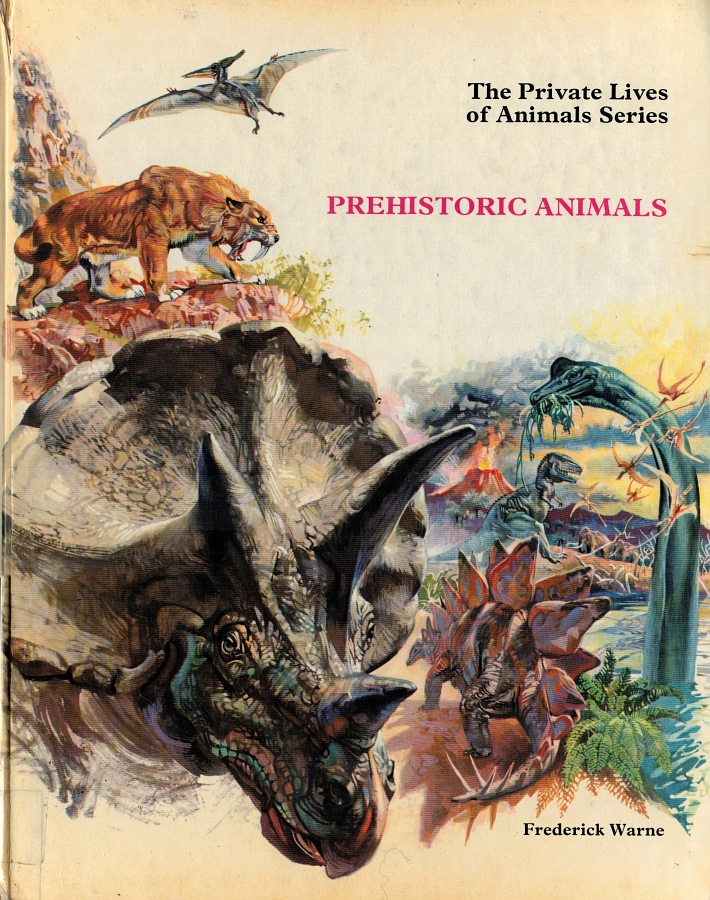
Vintage Dinosaur Art: Private Lives of Animals: Prehistoric Animals - Part 1

It Came From the 1970s! Originally published in Italy in 1971, Prehistoric Animals is part of the Privates Lives of Animals series, which otherwise featured entirely extant wildlife. When I posted a little something from this book on Facebook, it quickly became apparent that a number of people, including palaeontologists and artists, remember this book very fondly from their childhoods. It isn't surprising - the art in this book combines a surprisingly high level of technical proficiency with flagrant Knight/Zallinger/Burian copying and a healthy dollop of pulp. Why, they even managed to get Burian himself involved. Many thanks to Benjamin Hillier for sending me this one - it's a corker! (Just see how many 'homages' you can spot to classic palaeoart pieces on the cover alone.)


Friday, March 10, 2017

The Stomping Grounds: A Dinosaur Art Zine

Recently, there has been some back-and-forth on Facebook about what capital-P paleoart is, as John Conway proposed some guidelines for the Paleoartists group. While certain genres of dinosaur art - for instance Jurassic Park fan art - aren't too hard to rule out, other forms are a harder call. The group has been debating whether fantastical pieces based on close anatomical study of ancient life are allowable. Others have mused about how stylized something can be and still count as paleoart. I've certainly wondered that about Mammoth is Mopey. And it's a balancing act we've played at LITC, for instance with our 2013 All Yesterdays competition. But while we may debate the place and the value of Rigorous Paleoart vs. "mere" illustrations of prehistoric life, I think we can all agree that it's good for pop culture to be permeated with more depictions of prehistoric beasts based on contemporary paleontology.

This leads us to the subject of today's post. As I was traipsing through the dinosaur realms of DeviantArt recently, I came across a wonderful stylized Amargasaurus illustration by Tanya Kozak, AKA Virsiris. It looked like it could have been a still from a dinosaur cartoon I'd definitely watch. The description said that the illustration was part of Stomping Grounds, a dinosaur art zine. I followed the link to Gumroad and picked up a copy. It's sold on a pay-what-you-want scheme.

Carnotaurus © Tanya Kozak, shared here with the artist's permission.

Released about a year ago,Stomping Grounds couldn't be simpler in its execution. It is focused solely on illustration, without any text besides credits for the creators. I'd have appreciated a bit of background information on the species and the artist's rationale for each illustration, and I'd think it would justify a bump up from pay-what-you-want to a set price to cover the additional layout work required.

The zine is decidedly not filled with capital-P paleoart, but that's not the intent. This is a celebration of dinosaurs. Kozak invited a range of artists, many of whom work in animation, to contribute. So it's not surprising that the art bursts with character, like Squeedge's slavering Cryolophosaurus in pink plumage or Kari Fry's Dracorex standoff. My personal favorite was Neogeen's Troodon flock, dramatically rendered in red and drab green, all fully feathered. More than any other piece in the collection, Neogeen's suggests a wider world and I'd love to see it stretched out into a comic or animated piece. Kozak, whose Amargasaurus led me to the zine in the first place, has a few pieces in the zine, with standouts like a fierce Mosasaurus , a Carnotaurus with subtly but effectively exaggerated features, and a fuzzy, ready-for-cartoon-villainy Dilophosaurus.

The zine is well worth picking up and throwing a few buck the artists' way. It's heartening to see artists who aren't scientific illustrators continuing to absorb the good news of our current paleontological golden age. Head to Gumroad to download for free or name your price.

Tuesday, March 7, 2017

The Utahraptor Project competition

TL;DR (added 31/03): Your submissions should be humorous! We'd like an amusing take on what might have happened. See paragraph 5 below.

As many of you out there in Chasmoland will already be well aware, one of the most tantalising bonebed discoveries of the last decade was the that of a huge trove of Utahraptor skeletons in (fittingly enough) Utah. Fossilised alongside the remains of at least two iguanodontian ornithopods are the bones of numerous Utahraptor individuals at different growth stages, which promise to finally reveal what this formerly rather engimatic animal really looked like. (Suffice it to say, it certainly wasn't the monstrous steroidal Deinonychus that you remember from your childhood.)

The site was discovered by Matt Stikes back in 2001, and the huge block o' bones was subsequently excavated by Jim Kirkland (who described Utahraptor), Don DeBlieux and Scott Madsen along with numerous volunteers. The block is now being prepared in the Museum of Ancient Life in Lehi, Utah, under the auspices of Madsen (as Chief Preparator). You can read the full story of the project - from discovery, to excavation, to preparation - over on the official Utahraptor Project site, where there's also a handy index of Utahraptor-related press...not to mention this lovely video featuring Jim himself.

Wednesday, March 1, 2017

The 2017 Survey of Paleoartists

We have been living in a golden age of paleontological research for long enough that many in the paleontology community don't remember anything but the golden age. A vibrant community of researchers, journalists, artists, and enthusiasts has come of age in a time when exciting new discoveries are announced on a regular basis: challenging our preconceptions, fueling our wonder, stoking our creativity. This has all occurred with the rise of the internet, allowing us to share in the bounty on listservs, forums, art communities, and social media. It's led to a blossoming of new paleoart; surely, there is more high quality artistry dedicated to prehistoric life being produced now than at any other time.

And yet, as Witton, Naish, and Conway wrote in their essential 2014 commentary, "State of the Palaeoart," "many standard practises associated with palaeoart production are ethically and legally problematic, stifle its scientific and cultural growth, and have a negative impact on the financial viability of its creators." That viability has been a big question, especially since March of 2011, when paleoart legend Gregory S. Paul sparked a period of intense debate on the Dinosaur Mailing List. I won't rehash it here, but my big takeaway from this was a concern for paleoartists: is it even possible to make a living in the field? If so, how many people can the industry sustain?

To know this, we need to know what we're talking about, and there are many question marks. Who is creating paleoart? What are they creating? For what purpose? Who are they working for? How do they charge? How much do they make? Well, let's find out, shall we?

The 2017 Survey of Paleoartists

The 2017 Survey of Paleoartists is now open and taking responses. Matt Celeskey and Mark Witton were critical to the early development of the survey. I then brought in another round of reviewers, Bob Nicholls, Brian Engh, and Emily Willoughby. I'm grateful to all for their excellent feedback.

If you create paleoart, please take the survey. No matter your level of prestige, seniority in the field, your status as a professional or hobbyist, or how many works you've produced, I want your input. If you're unsure if you qualify, shove down that imposter syndrome and dive in. It's completely anonymous, and the information collected will help you and your peers navigate the field more confidently.

If you know a paleoartist, I ask you to shoot the link to them: bit.ly/paleoartsurvey. If you know a paleoartist who is not very active online or on social media, I beg of you to email the link to them. We need their input.

If you're a blogger, Youtuber, tweeter, or Tumblr-er, I would greatly appreciate your help in blasting the word out. Feel free to share the promotional graphic below, featuring a beautiful illustration from LITC's own Natee, in posts and on social media.

Promotional graphic for the 2017 Survey of Paleoartists

I'll keep the survey active for at least a month, so I'll occasionally post updates here, and I'll keep making noise elsewhere on the web, too. After that? I'll be reporting the results here at LITC, pursuing journal publication, and possibly completing a poster.

That link again is bit.ly/paleoartsurvey. We need data! Help get the data.

Tuesday, February 28, 2017

This Mesozoic Month: February 2017

Though I typically post these on the first, I'm running February's roundup a day early to make room for the launch of the 2017 Survey of Paleoartists tomorrow. Come back tomorrow to read about, and take, the survey!

In the News

Early in February, The Society of Vertebrate Paleontology spoke out against the Trump regime's hotly-debated immigration ban from nine majority-Muslim countries. Check out the full statement here.

Isaberrysaurus mollensis is a newly described primitive neornithischian from the Early Jurassic Los Molles Formation. Discovered with a belly full of cycad seeds, it was initially thought to occupy a more basal spot in ornithischia on account of its rather stegosaurian noggin. Read more from Franz Anthony at Earth Archives.

It barely missed the cut last month, so I'll include it this time. Saccorhytus coronarius is the newly discovered, 540 million year old contender for earliest deuterostome. As NPR's All Things Considered put it, S. coronarius was "basically a giant gaping mouth with spikes and some extra holes — probably for oozing waste." Sounds like I've got my Halloween costume figured out. Read more from Smithsonian, Phys Org, and CNN.

At Laelaps, Brian Switek introduces us to Keilhauia nui, a Jurassic ichthyosaur discovered in Svalbard, Norway and notable among its kin for the fact that its hips were preserved with it. Now we just need to enlist Weird Al to parody Shakira to make this story blow up.

Bulbasaurus phylloxyron illustration by Matt Celeskey, distributed with press materials for the PeerJ publication.

Bulbasaurus phylloxyron is a new, gnarly-looking dicynodont from the Karoo basin of South Africa, described by Christian Kammerer in PeerJ. And there's a Pokémon connection, so it actually made the news! Read more from Everything Dinosaur, Shaena Montanari for Forbes, Jon Tennant for PloS Paleo Community, and Sarah Sloat for Inverse. Matt Celeskey's restoration, above, is a beauty.

Around the Dinoblogosphere

LITC's Asher Elbein has been a busy guy. First: his terrific piece for Audubon on how modern paleontology is harnessing the power of lasers to study fossils: in this case, research published in December on the early Cretaceous bird Confuciusornis, indicating it was capable of flight and adapted for arboreality. After that appetizer, dive into his new piece for the Bitter Southerner, in which he writes about the largely obscured history of the continent of Appalachia. Though many of the Mesozoic fossils of the eastern US are scrappy, Asher writes, "...put enough scraps together, and you can catch a glimpse of something more: the shape of a body, the shape of a forest, the shape of a land lost beneath fathomless time."

Popular Mechanics ran a brief article on the Paleobiology Database Navigator, a tool that allows users to explore fossil localities by geological timeframe, taxa, or location. It's pretty great, check it out if you haven't already.

Thea Boodhoo tells the story of her involvement with the Institute for the Study of Mongolian Dinosaurs and lays out the background of the institute's mission to raise up a new generation of Mongolian paleontologists.

Learn about the fossils of Big Bend National Park from the Mary Anning's Revenge crew. It's like... maybe public lands are super-important and worth preserving? Is that a crazy, fringe idea these days?

Continuing the public lands theme, Robert Gay visits the PLoS Paleo Community blog to tell the story of Bears Ears National Monument's fossil treasures. I previously linked to a post on BENM in January, but it's too good a story to miss.

At Archosaur Musings, Dave Hone has launched a new series in which paleontologists discuss favorite or unsung scientific papers. He kicks it off with Mike Taylor, who writes about the process of publishing his paper with Matt Wedel on sauropod neck length.

"Scientist-led palaeoart should be the best there is," says Mark Witton, "carefully-executed, evidence-led syntheses of research conclusions in compelling artworks." So it's incredibly frustrating when paleoart commissioned by a scientist and created under their guidance fails in fundamental ways. Read Mark's full commentary at his blog.

There's a new paleontology-infused podcast in town: Common Descent.

Darren Naish shares a write-up of his talk at last autumn's Popularising Palaeontology event at King's College London. Head to Tet Zoo to read about his talk on paleoart memes. You can check out more about the workshop, including videos of the talks, at the Popularising Palaeontology website.

Jillian Noyes celebrates the enduring power of Disney's "Rite of Spring" segment of Fantasia at Extinct.

Did you know about Peru's Talara tar pits? Brian Switek waxes rhapsodic about their beautiful, jet-black bounty, as well as discussing some other tar pit sites that don't get the attention La Brea receives. In another post championing an unsung fossil, he gives some overdue love to Torvosaurus' smaller cousin Marshosaurus, a mid-sized Morrison predator only known from some bits of jaw and hip.

At Musings of a Clumsy Palaeontologist, Liz Martin-Silverstone is celebrating 150 years of Canadian paleontology, a rich history that kicked off with the discovery of a Dimetrodon on Prince Edward Island in 1845. Read her first post in the series here.

The Empty Wallets Club

Some juicy new books and art to pick up this month! I figure they're deserving of their very own section here. We'll see if there's enough every month to keep it around.

Anthony Martin's new book was released on February 7. Pick up The Evolution Underground to learn about the natural history of burrowing animals. Also check out Tony's post on the book at his Life Traces of the Georgia Coast blog.

If you haven't been to Chris DiPiazza's on-line store, do yourself a favor and check it out. I am particularly enamored of his successful effort to counter the "tiny arms" slander T. rex is prone to receive.

Some great stuff has been coming out from the 252MYA crew. Just a few recent pieces: Greer Strother's Hatzegopteryx poster. Franz Anthony's Ediacaran Biota tee. Julio Lacerda's Age of Fishes poster. I'll also note that 252MYA's licensing arm is now live, so there's literally no reason any media needs to resort to atrocious CG abominations instead of good paleoart.

Brian Engh is selling his paleoart book to Patreon supporters who pledge at the $20 per month level or higher, and if you commit to keeping that pledge level for at least two months, he'll draw a custom illustration of your choosing on the inside cover! And while you're here, dim the lights and check out Brian's second video dedicated to the dinosaur trackmakers of Copper Ridge. He also touches on gnarly injuries, the vital role of predators, the importance of public lands. Details on his book promotion at the end of the video.

It's not in the 252mya shop at the moment, but Gabriel Ugueto has added to his growing selection of Mesozoic fauna posters. Now available at Redbubble: Wessex dinosaurs and pterosaurs and one dedicated to the fauna of the Las Hoyas Formation of Spain. Dude's got a selfie next to the word "prolific" in the Merriam-Webster's.

Sharon Wegner-Larson released another great fossil-based design this month: Triceratops Rocks. Minerals, ginkgo leaves, and one of the coolest skulls of all time, what's not to love?

Emily Willoughby, Jonathan Kane, and Mike Keesey's new book God's Word or Human Reason?: An Inside Perspective on Creationism is now available. A limited number of signed hardcover copies are available from Emily for $40 through Paypal, too. The book, as you may guess from the subtitle, lays out evidence for evolution from a group of authors who were at one time creationists. Also, I had the distinct honor of designing the cover!

Crowdfunding Spotlight

A panel from page 11 of Paleocene © Mike Keesey. Shared here with the artist's permission.

More from Mike Keesey, why not? I love his comic Paleocene. Set in the devastated post K-T world, the opening chapter of the comic (he completed page 20 recently) has set the stage for a story about a clan of stem-primates as they struggle for survival. It even involves issues of class. I love the writing, the color, the atmosphere... it's just great. To support him in this and other endeavors, sign on to be a patron at his Patreon page.

A Moment of Paleoart Zen

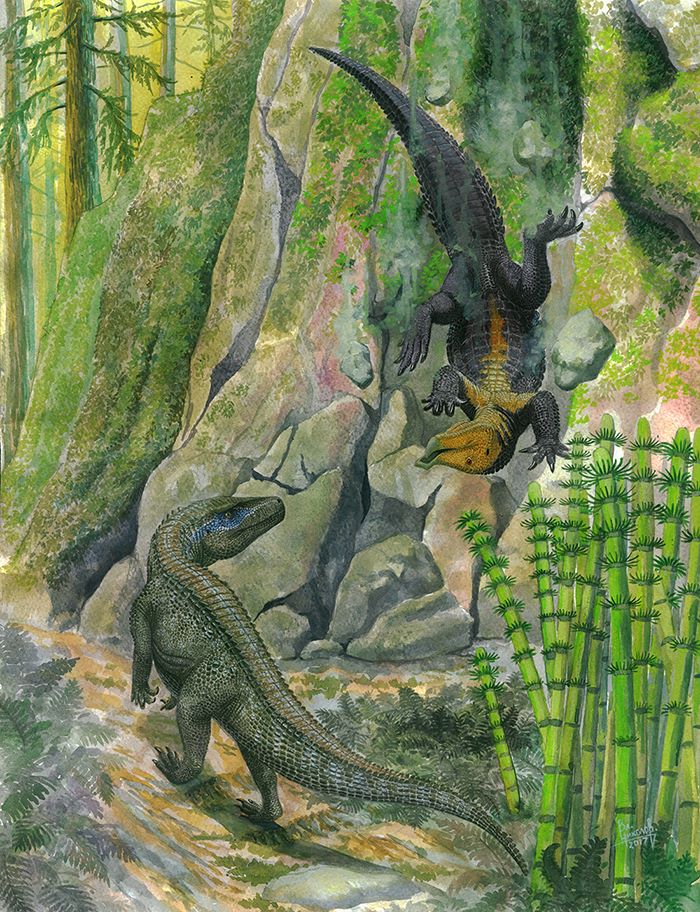
I felt like going non-dinosaurian this time around, and this terrific new illustration by Vladimir Nikolov fit the bill perfectly. At Facebook, he offers this description:

An unfortunate individual of the aetosaurian species Stagonolepis robertsoni is falling to its death, while a nearby passing Ornithosuchus woodwardi is suddenly offered a free lunch. In nature, in great many occasions, someone's loss and pain is someone else's gain. The scene takes place during the Late Triassic in what is now Scotland.
The Last Fall © Vladimir Nikolov. Shared here with the artist's permission.

You can check it out at DeviantArt and leave him a constructive comment, too.

That's a wrap for February. As ever, your comments and shares on social media are greatly appreciated. And seriously, come back tomorrow for the launch of the 2017 Survey of Paleoartists!

Wednesday, February 22, 2017

Return to Evolving Planet

A line of people snakes through the north entryway, populated mostly by locals taking advantage of a promotion offering free entry for state residents. From the middle of a group of twentysomethings, I hear a man's voice express mild disappointment as he peers past the ticket counters at the famous tyrant dinosaur beyond.

"I thought she'd be bigger."

"Just wait 'til you're below her," I respond.

Queen Sue. Photo by David Orr.

After attending the Wild Things conference this weekend, conversing with all sorts of people about conservation and urban ecology in the Midwest US, I grabbed the chance to visit the Field Museum.

The Field is one of my favorite places to spend a day indoors. In a previous post, I did a walkthrough of the Field's dinosaur hall (with more photos here). I thought that this time, I might aim a more critical eye at the exhibit, especially concerning the role of paleoart. Due to the heavy weekend crowd, I didn't even try for exhaustive documentation, but I think I got enough to be worth sharing here, and I'll supplement with some of my older photos. I'd also recommend Ben Miller's thoughtful walkthrough and review of the entire Evolving Planet exhibit at Extinct Monsters.

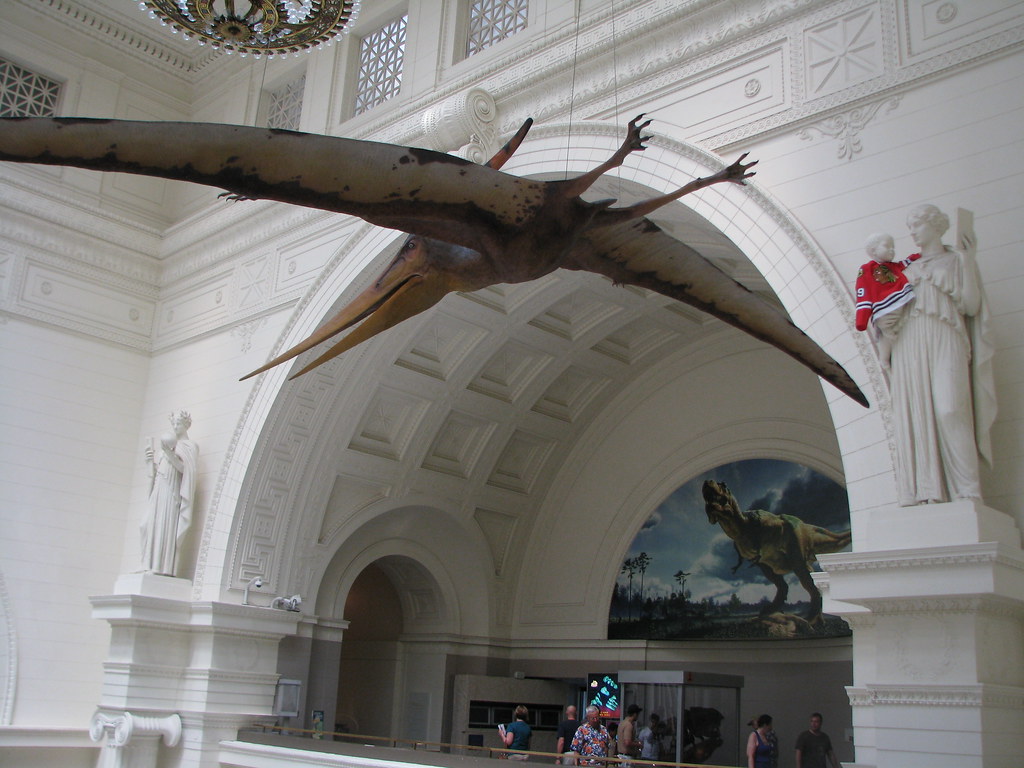
A Pteranodon model with the John Gurche "Sue" mural in the background.

The most visible pieces of 2-D paleoart in the Field are the Charles R. Knight murals, mounted high around the perimeter of the dinosaur hall as well as select positions along the exhibit's length. They surely deserve prominent display (the first paleoart visitors encounter would be Gurche's Sue mural overlooking the queen herself). I would love to see more contemporary artists given more prominence. Perhaps a revisit of classic Knight scenarios and compositions, with information given about the evolution of ideas in the last century of paleontological study.

Daspletosaurus mount with classic Knight Tyrannosaurus v. Triceratops in the background.
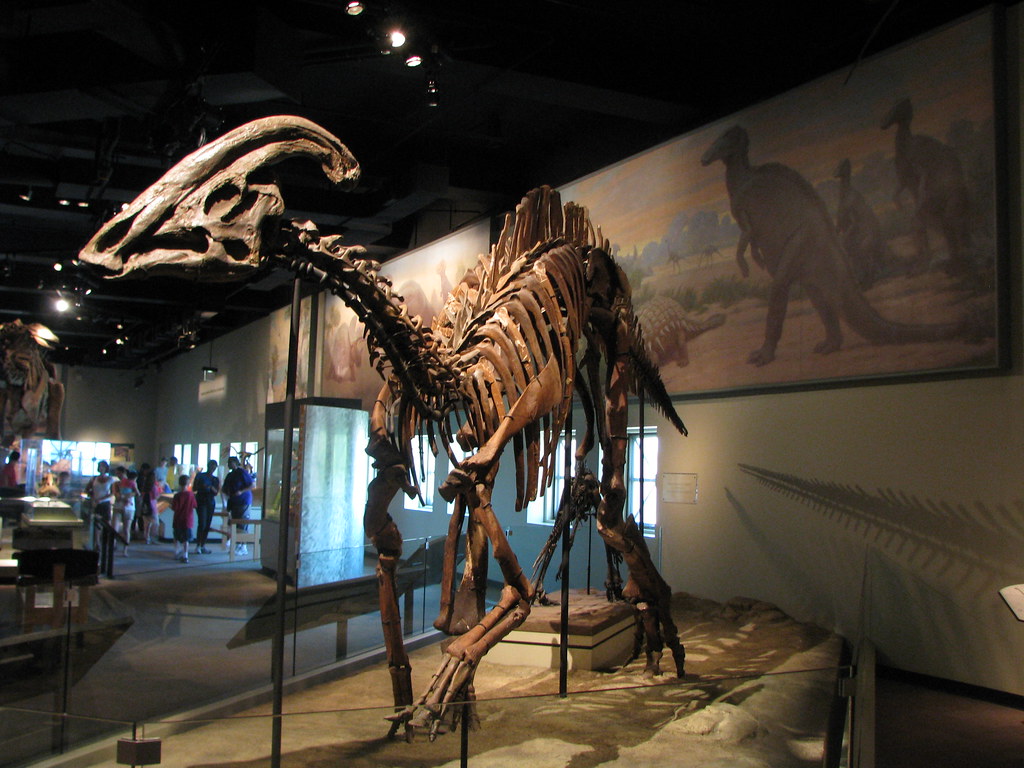
A mount of Parasaurolophus with retro Knight hadrosaurs in the background.
Pteranodon skeletal model with retro Tylosaurus and Archelon in the background.

Is that sacrilege? Maybe it is, but for the collection's importance to the history of paleoart, these pieces arguably work at cross-purposes to the content of the exhibit. In Evolving Planet, aside from "how do we know this?" passages on informational panels intended to counter creationist prejudices visitors may bring with them, the story of the science isn't foregrounded.* So it's a bit counterproductive to have so much antiquated scientific illustration present, without equally prominent discussion of how the science has progressed. In a museum where space is at a premium, it may be a pipe dream, but it's a pipe dream I like.

This is not to say that the art's vintage is entirely unremarked upon: for instance, Knight's place in the history of the science is called out in one of the informational panels, opposite the Stegosaurus mount.

Charles R. Knight's Stegosaurus

The exhibit isn't entirely devoid of newer art. The didactic panels accompanying fossil mounts include serviceable, if sometimes shrink-wrappy, occasionally GSP-posed, illustrations of the animals.

Illustration of Edmontonia, in a familiar pose.
Illustration of a skinny-necked Rapetosaurus juvenile.

There's no information on the artist. The style is sometimes too airbrushy, which doesn't do much for me personally.

Illustration of Stegoceras
Majungatholus, er, Majungasaurus illustration.

Some of the panels also include cladistic diagrams, which are helpful to ground the animals in their evolutionary context. There's even an explanation of what a cladogram is, and tough words like "Marginocephalians." Contrast this with a panel earlier in the exhibit, in which the Ediacaran biota is referred to simply as the "earliest animals." Such concision is understandable. But the amount of fine-grain information provided in the dinosaur hall implicitly confirms a visitor's idea that these animals are of the utmost importance.

Sauropod cladogram, with a scrawny-necked Apatosaurus in the middle.
Marginocephalian cladogram, featuring Triceratops. Protoceratops, and Anchiceratops illustrations. No pachycephalosaurs for you!.

In the small pocket of the hall dedicated to the evolution of birds, casts of Archaeopteryx and Sinornis fossils are accompanied by fully feathered models, as well as illustrations of Deinonychus and Sinornithosaurus in the old-school, grudgingly feathered mode.

A lightly feathered Sinornithosaurus illustration.
A similarly lightly feathered Deinonychus illustration.
The Archaeopteryx model.
The grumpy Sinornis model.

The theropods aren't the only 3-D work on display. The Parasaurolophus vocalization model is pretty great, and after visitors meet the iconic Herrerasaurus model upon entry to the dinosaur hall, they even get the chance to breeze by a big model of a plant.

Hey, look! A bennettitales model!

"Evolving Planet" is a great exhibit, and one I recommend to anyone visiting Chicago. Attentive visitors will definitely walk out of it with new knowledge of and appreciation for evolutionary history. Though this post may seem a bit nit-picky, it was valuable for me to visit with the intention of doing more than ogling the mounts one more time. After all, the exhibit turns 11 this year. It's reached the age of the exhibit it replaced, "Life Through Time." So it's only natural that it is starting to show its age. I think it's a good time to imagine the next form a paleontological exhibit may take at the Field. My wishlist? More on bird evolution in the dinosaur hall. And throughout, more contemporary paleoart integrated with displayed fossil specimens, more on the stories of how discoveries have been made and how they've enriched our understanding of life's history.

But hey, you can't complain too much when Tiktaalik is at the party.

Model of Tiktaalik roseae at the Field Museum.

* To see an exhibit at the Field that explicitly brings the scientific process into its narrative (see their compact-but-wonderful Lichens exhibit).